
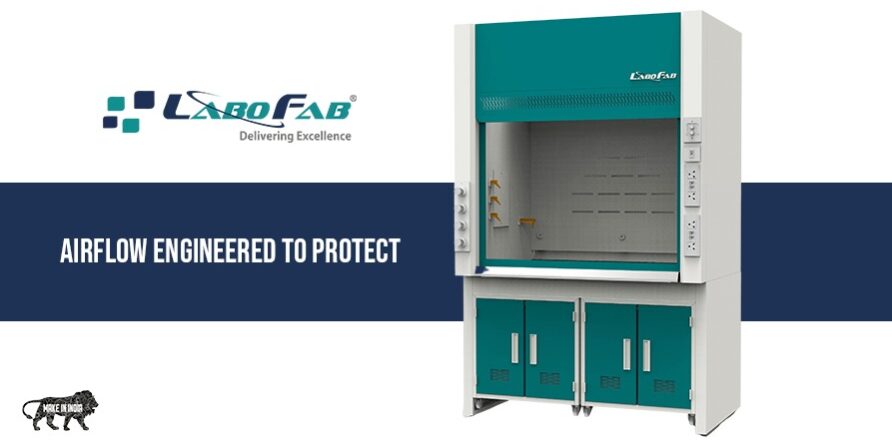
In controlled laboratory environments, ventilation is not a metal box with a fan attached. It is engineered containment architecture. And in Ahmedabad’s pharmaceutical and chemical manufacturing ecosystem, procurement teams are no longer impressed by fabrication claims — they scrutinize airflow data, material resilience, and audit-readiness documentation.
The real question is not who calls themselves the best.
The real question is: what qualifies a manufacturer to be considered the best?
The Shift from Fabrication to Engineered Containment Systems
Across Gujarat’s industrial— laboratories operate under increasingly strict regulatory oversight. Whether it is GMP-governed pharmaceutical production or advanced R&D environments, chemical handling demands precision extraction systems.
A modern laboratory ventilation enclosure must:
- Capture hazardous vapours at the point of origin
- Maintain stable face velocity during variable sash positions
- Distribute airflow evenly through internal baffle design
- Integrate seamlessly with duct routing and exhaust blowers
- Withstand corrosive exposure without structural fatigue
This is where the difference between a sheet-metal workshop and a specialized laboratory airflow engineering company becomes obvious.
Containment performance begins long before fabrication starts.
Why Airflow Engineering Defines True Industry Leaders
In pharmaceutical-grade environments, containment efficiency is measurable. Regulatory inspectors evaluate extraction stability, turbulence behavior, and installation alignment. Any fluctuation in airflow calibration becomes a compliance risk.
Advanced containment equipment manufacturers conduct:
- Air velocity simulations
- Pressure differential studies
- Chamber depth optimization
- Sash counterbalance testing
- Exhaust load compatibility analysis
Without this engineering groundwork, even visually impressive installations fail operational stress tests.
And in Gujarat’s regulated pharma sector, failure is expensive.
Configuration Matters: Matching Design to Application
No two laboratories operate identically. A research-focused quality control facility requires a different containment format compared to a pilot-scale chemical processing lab.
Bench-Integrated Extraction Units
Compact research spaces demand workstation-mounted extraction enclosures engineered for limited footprints. These installations must balance suction efficiency with ergonomic working height.
When selecting a benchtop fume hood manufacturer in Ahmedabad, buyers assess airflow uniformity, sash movement control, and internal turbulence reduction.
Full-Height Walk-In Containment Chambers
Pilot plants and bulk chemical testing environments require larger containment volumes capable of housing heavy instrumentation and process apparatus.
Industrial fume containment manufacturers in India must ensure chamber expansion does not compromise face velocity or extraction balance.
Low-Level Analytical Containment Structures
Analytical laboratories often require seated operation and extended observation. Low-profile containment designs must maintain effective vapour capture while supporting operator comfort.
Professional laboratory safety system providers in Gujarat engineer these formats with calibrated airflow distribution rather than oversized blowers that create instability.
Why Gujarat’s Pharmaceutical Leaders Prefer Certified Manufacturers
The pharmaceutical industry across Ahmedabad operates within strict compliance frameworks. During inspections, ventilation containment systems are evaluated for:
- Airflow performance validation
- Structural durability
- Installation precision
- Documentation traceability
- Preventive maintenance planning
Reputable chemical exhaust hood suppliers provide structured technical files, performance reports, and commissioning validation. This documentation significantly reduces audit friction.
Facilities that collaborate with certified laboratory ventilation manufacturers in Gujarat experience smoother regulatory interactions because the engineering evidence supports operational safety claims.
What Separates the Best Lab Fume Hood Manufacturer in Ahmedabad from the Rest
Market leadership is not marketing language. It is demonstrated through engineering accountability.
A true leader in laboratory containment manufacturing will provide:
- Custom airflow calculations for each installation
- Material selection based on chemical exposure intensity
- Precision-balanced sash mechanisms
- Reinforced structural frameworks for long-term durability
- Post-installation performance verification
The difference is subtle — until operational stress reveals weaknesses.
Pharma companies and research institutions across western India increasingly recognize that ventilation infrastructure is not a procurement expense. It is risk management.
Local Expertise with National Engineering Standards
Ahmedabad’s industrial landscape demands manufacturers who understand:
- Regional pharma compliance expectations
- Climate-related corrosion considerations
- Industrial zoning ventilation norms
- On-site coordination requirements
Leading fume hood manufacturers in India combine national engineering standards with localized installation expertise.
That balance determines whether a system performs for five years — or fails in two.
Engineering-Backed Containment for Demanding Laboratories
Labofab operates as an engineering-focused laboratory containment equipment manufacturer in Ahmedabad, serving pharmaceutical, research, and chemical processing industries across Gujarat.
The emphasis is not on volume production. It is on airflow precision, structural integrity, and installation alignment that stands up to regulatory scrutiny.
In environments handling volatile compounds, dependable containment architecture is not optional.
It is foundational infrastructure.
FAQs
- How do I evaluate a laboratory containment equipment manufacturer?
Review airflow validation methods, structural material quality, compliance documentation, and installation expertise. - Are workstation-mounted extraction units suitable for pharmaceutical labs?
Yes, for controlled R&D operations. High-intensity processes may require larger containment chambers. - Why is airflow stability more important than blower size?
Oversized extraction can create turbulence. Balanced velocity ensures consistent vapour capture. - Do certified manufacturers help during regulatory audits?
Structured documentation and performance validation simplify compliance verification.
5. What long-term risks come with poorly engineered systems?
Airflow imbalance, corrosion damage, structural fatigue, and costly retrofitting.