
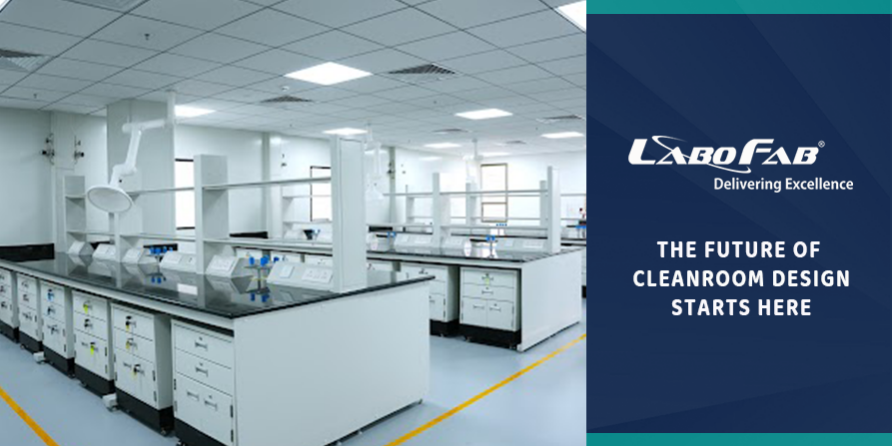
Cleanrooms in India are no longer judged only by airflow diagrams and qualification reports. The conversation has sifted. In 2026, regulators, auditors and facility leaders are looking deeply at materials, surfaces and infrastructure performance over time. As a result, cleanroom furniture in India has moved from the background to the spotlight.
Furniture is no longer treated as a supporting element. It is now evaluated as a critical component of contamination control, operational continuity and long-term compliance.
The Shift Redefining Cleanroom Furniture in India
Across pharmaceutical, biotech, and advanced manufacturing facilities, expectations have sharpened. Cleanroom audits today are less forgiving of assumptions and more focused on physical realities. Furniture—worktables, storage units, shelving, and pass-through systems—is closely examined for material stability, cleanability, and contamination risk.
This shift has exposed a gap. Furniture that once passed without question is now being scrutinized for coating degradation, corrosion potential, and particle generation. As a result, many facilities are reassessing their infrastructure choices and aligning them with materials that offer predictable, long-term performance.
Why 2026 Marks a Turning Point for Cleanroom Furniture Standards in India
The current regulatory environment demands consistency, not quick fixes.
Auditors are evaluating how materials behave after years of chemical exposure, frequent sanitation, and daily operational stress. At the same time, facility leaders are moving away from short-term cost savings toward lifecycle-focused decisions. Furniture that requires repeated replacement, refinishing, or corrective action is now viewed as an avoidable risk.
For export-driven Indian manufacturers, alignment with international expectations has become standard practice. This convergence of stricter audits, global exposure, and operational realism has firmly redefined cleanroom furniture standards in India.
SS Clean Room Furniture Emerges as the Industry Benchmark
In this environment, SS clean room furniture has established itself as the most dependable solution.
Stainless steel delivers inherent advantages that alternative materials struggle to sustain. It resists corrosion, tolerates aggressive cleaning agents, and maintains surface integrity under continuous use. Unlike coated or painted furniture, stainless steel does not fail quietly—there are no peeling layers or hidden contamination sources.
Because of this reliability, stainless steel cleanroom furniture in India is increasingly treated as the default choice for facilities that prioritize compliance and longevity.
What Defines the New Standard for Cleanroom Furniture in India
The new standard extends beyond selecting stainless steel. It reflects a design philosophy.
Furniture is now evaluated on material grade suitability, fabrication quality, and cleanroom-friendly geometry. Weld integrity, edge treatment, and ease of cleaning are critical considerations. Designs that encourage dust accumulation or complicate sanitation are steadily being eliminated.
Flexibility has also become essential. Cleanrooms evolve as processes expand or change. Furniture systems that support modular reconfiguration allow facilities to adapt without compromising cleanliness or compliance.
Material, Fabrication, and Modularity in SS Clean Room Furniture
High-performing SS clean room furniture balances durability with adaptability. Modular systems enable efficient layout changes, while custom-built units ensure alignment with specific workflows. This approach supports operational efficiency while reducing the risk of compliance issues linked to ad-hoc modifications.
Facilities adopting such systems experience fewer disruptions and greater audit confidence.
Why Pharmaceutical Cleanrooms Prefer SS Clean Room Furniture in India
Pharmaceutical environments demand repeatability, hygiene control, and reliability. Stainless steel supports all three. Its resistance to chemical damage, ease of sanitation, and structural stability make it the preferred choice for critical cleanroom zones.
Many facilities transitioning fully to stainless steel systems report improved audit outcomes and reduced maintenance intervention over time.
Beyond the Present: The Direction of SS Cleanroom Furniture Systems in India
What’s taking shape now is standardization.
Furniture is being considered earlier in project planning, not after equipment installation. Design audits increasingly include furniture layouts, and hygiene strategies are being built around material behavior rather than corrective measures.
In this landscape, SS cleanroom furniture systems are no longer treated as accessories. They are infrastructure.
FAQs
- Why is stainless steel preferred for cleanroom furniture today?
Because it offers durability, corrosion resistance, and consistent cleanability aligned with current audit expectations. - Is SS clean room furniture mandatory for GMP compliance in India?
While not explicitly mandated, it is widely accepted as the most audit-resilient option. - Which industries benefit most from stainless steel cleanroom furniture?
Pharmaceuticals, biotech, healthcare, electronics manufacturing, and research facilities. - How does SS furniture reduce contamination risks?
By maintaining surface integrity, resisting chemical damage, and minimizing particle generation. - Can SS cleanroom furniture be customized for specific layouts?
Yes. Modular and custom solutions are commonly used to align with process flow and cleanroom design.
Setting the standard in 2026 requires clarity, not compromise.
Labofab designs and manufactures SS clean room furniture engineered for modern Indian cleanrooms—where compliance, durability, and intelligent design work in unison.
Explore Labofab’s cleanroom furniture solutions and build infrastructure that stands up to today’s audits and tomorrow’s expectations.