
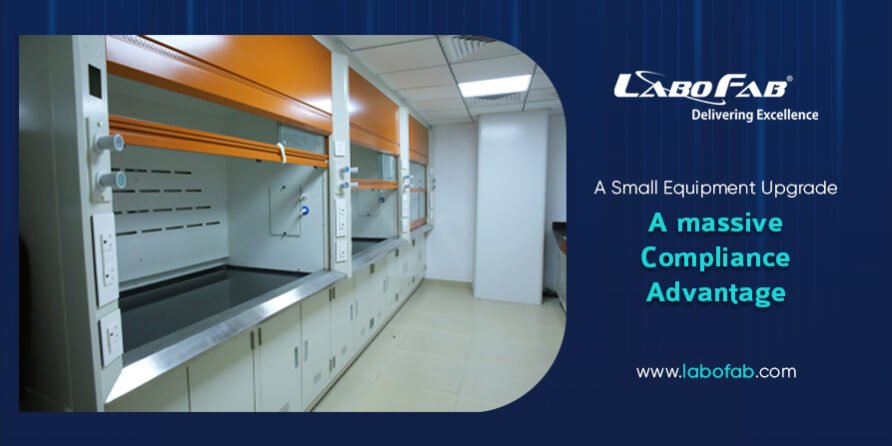
Every pharmaceutical laboratory is built on accuracy, consistency, and safety. Yet one of the most critical pieces of laboratory safety equipment often receives attention only when something goes wrong—the laboratory fume hood.
Whether handling volatile solvents, corrosive chemicals, toxic reagents, or hazardous vapours, a laboratory fume hood serves as the primary barrier between laboratory personnel and harmful chemical exposure. It plays a vital role in chemical fume extraction, hazardous chemical handling, laboratory containment, and maintaining a safe laboratory airflow system.
Many laboratories continue using ageing equipment because it appears to function normally. However, appearance alone doesn’t guarantee safe performance. Over time, airflow inconsistencies, reduced face velocity, and worn-out components can compromise containment, putting both researchers and regulatory compliance at risk.
This case study explores how a WHO-GMP-certified pharmaceutical quality control laboratory identified hidden issues in its ageing fume hoods just weeks before a compliance audit—and how partnering with the right laboratory fume hood manufacturer transformed its laboratory safety, operational efficiency, and regulatory preparedness.
The Compliance Challenge No One Expected
A mid-sized pharmaceutical manufacturer in Ahmedabad was preparing for its annual WHO-GMP compliance audit. The Quality Control laboratory processed hundreds of samples each week, including solvent analysis, raw material testing, and finished product verification.
The laboratory housed six benchtop laboratory fume hoods that had been in operation for over a decade.
At first glance, everything appeared normal.
The exhaust fans were operational.
The glass sashes moved smoothly.
Routine testing continued without interruption.
Since there had been no major incidents, the team believed their laboratory exhaust ventilation system was performing as intended.
However, subtle warning signs had begun to emerge.
Several analysts reported mild headaches after prolonged solvent handling. Occasionally, faint chemical odours drifted beyond the working chamber. During one analytical procedure involving volatile solvents, visible vapours briefly escaped from the hood before being contained.
Each incident seemed insignificant on its own.
Together, they revealed a much larger problem.
Why Laboratory Fume Hoods Matter Beyond Daily Operations
A laboratory fume hood is far more than a ventilated enclosure.
It is an engineered safety system designed to protect laboratory personnel by controlling airflow, containing hazardous chemicals, and safely removing contaminated air through a dedicated laboratory exhaust system.
When functioning correctly, a laboratory fume hood helps:
- Protect researchers from hazardous chemical exposure
- Support effective chemical fume extraction
- Maintain consistent laboratory airflow monitoring
- Improve laboratory safety compliance
- Prevent cross-contamination
- Support WHO-GMP, ISO, and SEFA requirements
- Create a safer working environment during hazardous chemical handling
Whether selecting a ducted fume hood for continuous exhaust or a ductless fume hood with advanced filtration, choosing the right solution depends on laboratory applications, chemical compatibility, and compliance requirements.
The Hidden Problems Discovered During Airflow Validation
As part of the audit preparation, the Environmental Health & Safety team scheduled a complete airflow validation and face velocity testing for every laboratory fume hood.
The results were concerning.
Several units recorded face velocities below the recommended 80–120 FPM operating range. Airflow patterns were inconsistent, creating turbulence inside the working chamber instead of directing contaminants safely towards the exhaust.
The digital airflow monitoring systems had not been calibrated for years.
Chemical-resistant work surfaces showed visible signs of deterioration after years of continuous exposure to corrosive reagents.
Even more concerning, the laboratory engineering team discovered minor leakage points within sections of the laboratory exhaust ventilation network that reduced overall containment efficiency.
Although the equipment remained operational, it no longer met the performance standards expected from modern laboratory containment equipment.
The QC Manager later reflected:
“We realised we had been relying on assumptions rather than performance data. The equipment looked functional, but the validation results told a completely different story.”
That moment changed the laboratory’s approach to safety.
Choosing the Right Laboratory Fume Hood Manufacturer
Replacing the existing equipment required more than comparing product specifications.
The laboratory wanted a manufacturer capable of understanding pharmaceutical workflows, regulatory expectations, laboratory engineering, and future expansion plans.
Their evaluation focused on several important criteria:
- Proven experience supplying pharmaceutical laboratory equipment
- Custom-designed laboratory fume hoods
- Compliance with WHO-GMP and laboratory safety standards
- Reliable airflow validation support
- Installation expertise
- Long-term maintenance and calibration services
After evaluating multiple fume hood manufacturers in India, one company approached the project differently.
Rather than sending a standard quotation, Labofab arranged an on-site engineering assessment. Its technical specialists evaluated laboratory workflow, existing duct routing, laboratory exhaust ventilation, utility connections, equipment placement, operator movement, and anticipated future capacity before recommending a customised solution.
That consultative approach immediately distinguished Labofab from other suppliers.
Labofab’s Customised Solution
Following the assessment, Labofab recommended replacing all six ageing systems with customised benchtop laboratory fume hoods specifically designed for pharmaceutical quality control applications.
Each unit featured:
- Chemical-resistant epoxy resin work surface
- Aerodynamic air foil construction
- Toughened glass vertical sash
- Three-stage airflow baffle system
- Digital airflow monitors with alarm
- Remote-controlled gas, water, and vacuum valves
- Modular powder-coated storage cabinets
- Energy-efficient airflow design
- Easy-access maintenance panels
Because the facility already had a central laboratory exhaust system, the new laboratory fume hoods were integrated without requiring significant structural modifications. Installation was completed over a weekend, allowing laboratory operations to resume on schedule.
Following commissioning, comprehensive face velocity testing, airflow validation, and laboratory airflow monitoring confirmed that every unit met recommended safety standards. Labofab also provided complete documentation, including installation reports, calibration certificates, airflow validation records, operating manuals, and compliance documentation—ensuring the laboratory was fully prepared for future inspections.
Within weeks, the pharmaceutical facility successfully completed its WHO-GMP audit without receiving a single observation related to laboratory safety or chemical containment.
Benefits After Installation
The improvements were immediately noticeable.
Laboratory personnel reported cleaner air, better airflow consistency, and increased confidence while handling hazardous chemicals.
Chemical odours completely disappeared, and routine laboratory work became safer and more comfortable.
Management appreciated another important advantage.
Instead of worrying about ageing equipment and unexpected compliance issues, they now had a modern laboratory fume hood system supported by regular maintenance guidance, performance documentation, and ongoing technical support.
The investment wasn’t simply about purchasing new equipment.
It was about creating a safer, more efficient laboratory.
Signs Your Laboratory Fume Hood Needs Replacement
Not sure whether your current system is performing properly?
Watch for these warning signs:
- Chemical odours escaping outside the hood
- Face velocity below recommended limits
- Airflow monitor not functioning correctly
- Damaged or cracked work surfaces
- Poor chemical containment
- Frequent maintenance issues
- Failed safety or compliance audits
- Equipment older than 10–15 years
If you notice any of these issues, it’s time to schedule a professional performance evaluation.
Ready to Upgrade Your Laboratory Safety?
Your laboratory fume hood is one of the most important safety investments in your facility. If your existing system is ageing, underperforming, or due for a compliance audit, now is the perfect time to evaluate its performance.
Labofab designs and manufactures high-performance laboratory fume hoods tailored to the unique requirements of pharmaceutical, research, biotech, and industrial laboratories across India.
Talk to our experts today and discover the right laboratory fume hood solution for your laboratory.
🌐 labofab.com
Frequently Asked Questions
Q1. How often should a laboratory fume hood be tested?
A laboratory fume hood should undergo performance testing at least once every year to verify airflow, face velocity, and operator safety.
Q2. What is the difference between a ducted and ductless fume hood?
A ducted fume hood removes hazardous air through an external exhaust system, while a ductless fume hood filters contaminated air before recirculating it back into the laboratory.
Q3. How long does a quality laboratory fume hood last?
With proper maintenance and annual calibration, a high-quality laboratory fume hood typically lasts between 15 and 20 years.
Q4. Why choose Labofab?
Labofab is a trusted manufacturer & supplier of laboratory fume hoods, offering customised solutions, professional installation, compliance documentation, and dependable after-sales support for pharmaceutical, research, biotech, and industrial laboratories.