
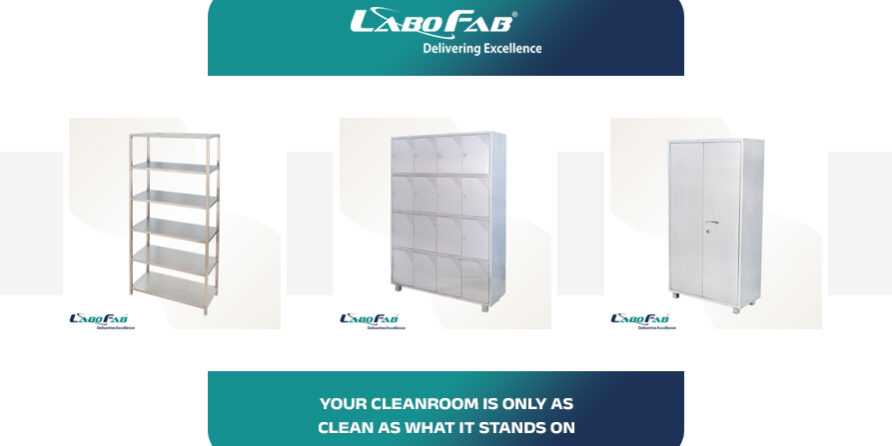
A well-designed cleanroom creates a sense of certainty. With advanced filtration systems regulating the air, controlled pressure differentials maintaining balance, and strict operational protocols guiding every movement, it is easy to believe that contamination is firmly under control. This belief, while comforting, often goes unquestioned.
However, a closer look at real-world operations reveals a different story. If cleanrooms are as controlled as they appear, why do contamination risks continue to surface during audits and routine processes? Why do environments that seem technically sound still encounter compliance gaps?
The answer does not usually lie in the air systems. It lies in the surfaces that interact with that air every second of operation. This is where SS clean room furniture becomes more than a supporting element—it becomes a defining factor. Cleanliness is not sustained by airflow alone; it is sustained by every material that exists within that controlled space.
Why SS Clean Room Furniture Plays a Critical Role in Cleanroom Performance
When professionals search for SS clean room furniture manufacturers or evaluate cleanroom furniture suppliers, the immediate goal often appears straightforward—identify a reliable source, assess specifications, and proceed with procurement. Yet, beneath this process lies a deeper intent that is rarely articulated but always present.
The real objective is not simply to furnish a cleanroom. It is to preserve its integrity over time.
Stainless steel clean room furniture supports this objective through properties that directly influence contamination control. Its non-porous surface minimizes microbial retention, its resistance to corrosion ensures long-term stability, and its smooth finish allows effective cleaning without leaving behind residues. These characteristics are not technical luxuries; they are functional necessities in environments where even minor deviations can lead to significant consequences.
This raises an important consideration. If the purpose of a cleanroom is to maintain a controlled environment, can any surface within it afford to behave unpredictably?
Understanding Buyer Intent Behind SS Clean Room Furniture Searches
Search behavior in this category reveals more than just keywords; it reveals urgency and responsibility. Queries such as SS clean room furniture India, pharma clean room furniture supplier, or GMP compliant clean room furniture are rarely casual. They are typically driven by specific scenarios—setting up a new facility, upgrading to meet compliance standards, or addressing existing operational challenges.
In each case, the decision-maker is balancing multiple priorities: performance, durability, compliance, and cost. While pricing often appears to dominate discussions, it is rarely the true driver. The underlying concern is risk—how to minimize it, how to control it, and how to ensure it does not escalate over time.
This is why experienced SS clean room furniture manufacturers in India approach the conversation differently. Instead of focusing solely on specifications, they align their solutions with the operational realities of the environment, ensuring that the furniture contributes to stability rather than becoming a point of vulnerability.
Stainless Steel Grades in Clean Room Furniture: A Decision with Long-Term Impact
Material selection is often simplified during procurement, yet it carries long-term implications that extend far beyond initial installation. The distinction between SS 304 and SS 316 clean room furniture is a prime example of this.
SS 304 offers reliable performance in many controlled environments, making it a common choice. However, when the environment involves exposure to chemicals, higher humidity, or stringent pharmaceutical requirements, SS 316 provides enhanced resistance that becomes critical over time.
The question, then, is not which material is more popular, but which material aligns with the demands of the environment. Choosing a lower grade may not result in immediate failure, but it can gradually introduce issues such as corrosion, surface degradation, and increased maintenance. These issues often remain unnoticed until they begin to affect performance and compliance.
In environments where consistency is essential, can such gradual risks be considered acceptable?
Design Engineering in SS Clean Room Furniture: Where Cleanliness Is Sustained or Compromised
While material forms the foundation, design determines how effectively that material performs in practice. Cleanroom furniture must be engineered with an understanding of how contamination behaves—where it settles, how it accumulates, and what makes it difficult to remove.
Poor design introduces complications in subtle ways. Sharp edges can trap particles, visible joints can accumulate contaminants, and uneven surfaces can hinder proper cleaning. These are not dramatic failures, but they are persistent ones, gradually affecting the environment.
In contrast, well-designed clean room workstations, benches, and SS storage cabinets are created with seamless construction, smooth finishes, and geometries that support efficient cleaning. Such features do not draw attention to themselves, yet they play a continuous role in maintaining hygiene standards.
This distinction highlights an important point. Cleanroom furniture is not defined solely by what it is made of, but by how thoughtfully it is designed.
GMP Compliant SS Clean Room Furniture: Beyond Certification
Compliance is often treated as a milestone—something to be achieved and then maintained. However, in cleanroom environments, compliance is an ongoing condition that must be supported by every component within the space.
GMP compliant SS clean room furniture contributes to this condition by ensuring that surfaces do not shed particles, materials remain stable under chemical exposure, and cleaning processes remain effective over time. These factors collectively support the broader goal of maintaining a controlled environment.
It is worth considering whether compliance should be viewed as a periodic requirement or as a continuous responsibility. If the latter is true, then every decision related to materials and design carries ongoing significance.
Modular SS Clean Room Furniture: Adapting to Evolving Laboratory Needs
Modern cleanrooms are no longer static environments. As processes evolve and operational requirements change, the need for adaptability becomes increasingly important. This is where modular clean room furniture offers a practical advantage.
By allowing layouts to be adjusted without major structural changes, modular systems support efficiency and scalability. SS clean room storage cabinets and workstations designed with modularity in mind enable laboratories to optimize space, improve workflow, and respond to new demands with minimal disruption.
This shift reflects a broader trend. Cleanrooms are not just controlled spaces; they are dynamic systems that must adapt while maintaining their core function.
Choosing the Right SS Clean Room Furniture Manufacturer in India
The effectiveness of cleanroom furniture ultimately depends on the expertise behind its design and production. Selecting the right SS clean room furniture manufacturer in India involves more than evaluating product specifications; it requires assessing the manufacturer’s understanding of cleanroom environments.
Manufacturers with relevant experience bring valuable insights into material selection, design considerations, and compliance requirements. They approach each project with an awareness of how the furniture will function within the larger system, ensuring that it supports both operational efficiency and contamination control.
This raises a practical question. Is the decision being guided by immediate requirements, or by long-term performance?
The Realisation: Cleanroom Integrity Is Built from the Ground Up
Cleanrooms rarely fail in obvious ways. Their weaknesses tend to develop gradually, often going unnoticed until they begin to affect outcomes. These weaknesses are not always found in complex systems; they often originate in elements that seem routine.
SS clean room furniture represents one of these elements. It exists at the intersection of material science, design engineering, and operational discipline, quietly influencing the performance of the entire environment.
Recognizing this shifts the perspective. Cleanroom integrity is not defined solely by advanced systems or strict protocols. It is built, layer by layer, through decisions that ensure every component supports the same objective.
🚀 Build a Cleanroom That Performs as Intended
For environments where consistency, compliance, and control are essential, every detail matters. Choosing the right SS clean room furniture solutions is not just a procurement decision—it is a commitment to maintaining standards over time.
Because in a space designed to eliminate contamination, reliability is not optional. It is expected.
❓ FAQs
- Why is SS clean room furniture preferred in controlled environments?
It offers non-porous, corrosion-resistant, and easy-to-clean surfaces that support contamination control. - What is the difference between SS 304 and SS 316 in clean room furniture?
SS 316 provides higher resistance to chemicals and corrosion, making it suitable for more demanding environments. - What makes clean room furniture GMP compliant?
It must be designed to prevent particle accumulation, be easy to clean, and maintain stability under operational conditions. - What are the benefits of modular clean room furniture?
It allows flexibility, scalability, and improved workflow efficiency in evolving laboratory setups. - How should one choose an SS clean room furniture manufacturer in India?
By evaluating their expertise in cleanroom standards, customization capabilities, and long-term performance reliability.