
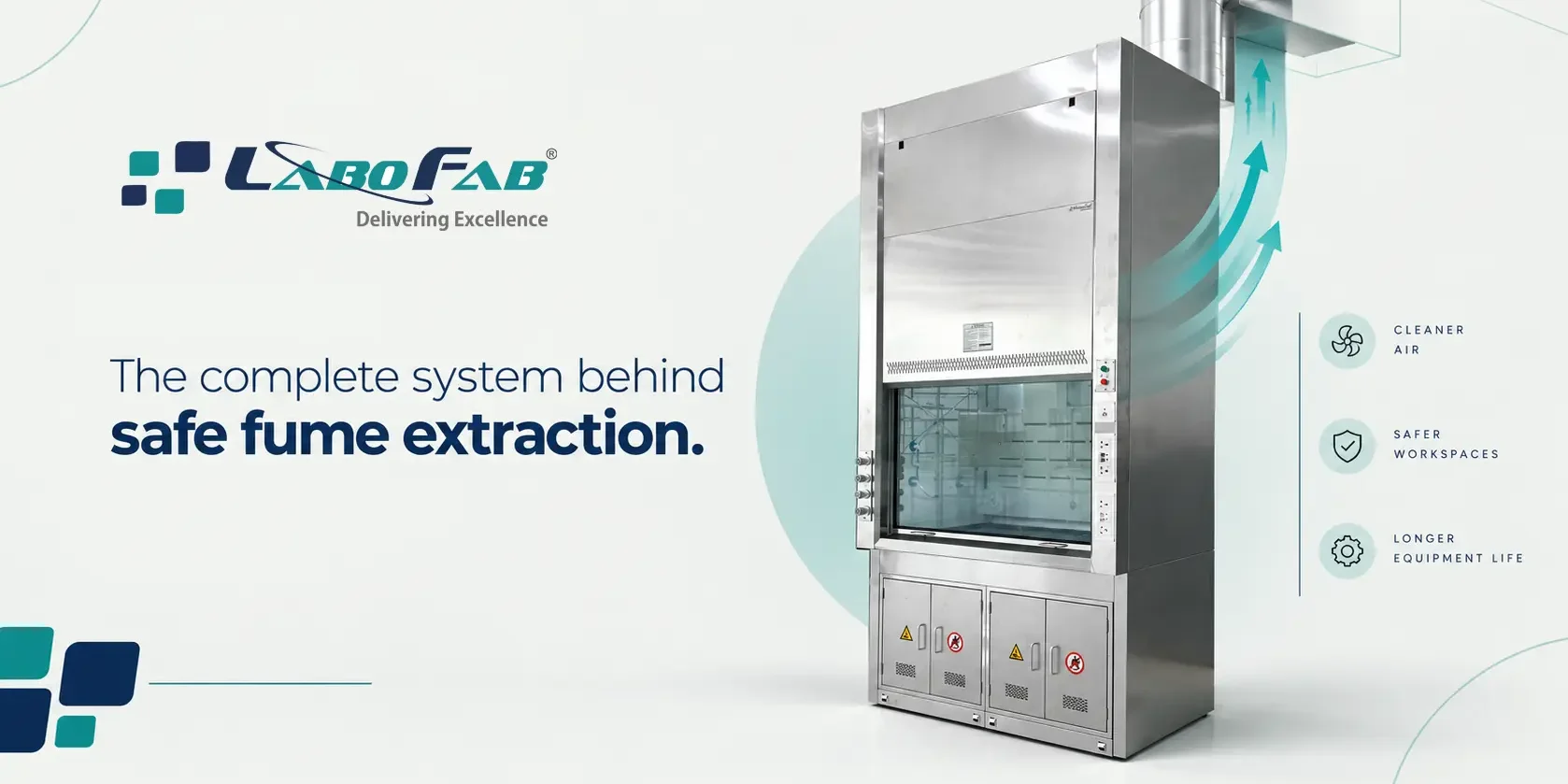
Your fume hood is installed. The sash glides smoothly. The fan is humming.
Everything looks ready.
But here is the question most people skip: where does the air go once it leaves the hood?
That one answer decides whether your setup performs or just looks the part.
A fume hood is not a lone cabinet. It is one link in a chain: hood, baffles, plenum, duct, fan, discharge. Weaken one link and the rest pay for it.
And the goal was never just to move air. It is to give contaminated air a clear, predictable route out of your lab.
It Starts at the Sash
Air slips in through the sash opening, crosses your work area and heads for the baffles. The baffles spread it out before it reaches the plenum.
Face velocity, airflow volume, sash position and internal layout all play off each other. Open the sash wider and the entry area changes. Clutter the work surface and you can block or redirect the flow.
What you want is smooth, controlled movement, not brute suction. Messy airflow means turbulence, and turbulence means fumes where you do not want them.
But the hood only captures the air. The rest of the system has to carry it away.
Every Bend Costs You
Once air leaves the hood, it has to fight its way through the duct. Every metre, every elbow, every turn adds resistance. Engineers call it pressure loss.
Picture the route: out of the hood, three turns, a long run, then the fan. The fan must beat all of that and still deliver the airflow your hood needs.
That is why choosing a fan by its airflow rating alone is a trap. The sharper question is: how much air can it move against this exact duct system?
Hood, duct and fan work best when they are planned together, not bought as three separate items.
Do Not Treat the Duct as an Afterthought
It looks like the boring part. It is not. Four things decide how well it works:
- Too small and resistance climbs. Too large and velocity and cost become problems.
- Long runs and sharp bends add pressure loss.
- Chemical vapours can react with some duct materials, so choose based on what you actually handle.
- The air has to reach its intended outlet under real operating conditions.
Even the hood type changes the plan. A benchtop unit and a walk-in unit come with very different space and routing limits.
So, settle the duct early, together with the hood, not after it.
Look for an Engineer, Not Just a Seller
A quotation tells you the price of a hood. It does not tell you whether the whole system will work in your lab.
So, before you choose a manufacturer, notice what they ask you:
- Which chemicals will you handle?
- What kind of work happens inside the hood?
- What airflow do you need, and where will the duct run?
- Which materials suit the exhaust path, and what fan capacity is required?
- How will it be installed and tested?
If they start with your application instead of their catalogue, that is a good sign.
At Labofab, fume hood solutions are built around your lab’s needs, including benchtop, low-bench and walk-in configurations. The hood and its exhaust setup are designed to work as one.
Remember the chain: Hood → Baffle → Plenum → Duct → Fan → Discharge.
Your system is only as strong as its weakest link.
Planning a Fume Extraction System?
The right hood is only the beginning. Let us help you plan the full path, from sash to discharge.
Talk to Labofab and build a fume hood solution around your application.
FAQs
- Why is exhaust duct design important for a fume hood?
It affects airflow resistance, pressure loss and whether the system can keep up the required exhaust performance.
- What are the main parts of a fume hood exhaust system?
Hood, baffle, plenum, exhaust ductwork, exhaust fan and final discharge.
- Does duct length affect fume hood performance?
Yes. Longer runs and extra bends increase resistance and pressure loss, so they need to be planned for.
- Does every fume hood use the same duct design?
No. It depends on the hood type, application, airflow, materials, chemical compatibility and the installation route.
- What should I discuss with a fume hood manufacturer?
Your application, chemicals, hood configuration, airflow, duct routing, fan, materials, installation and testing.