
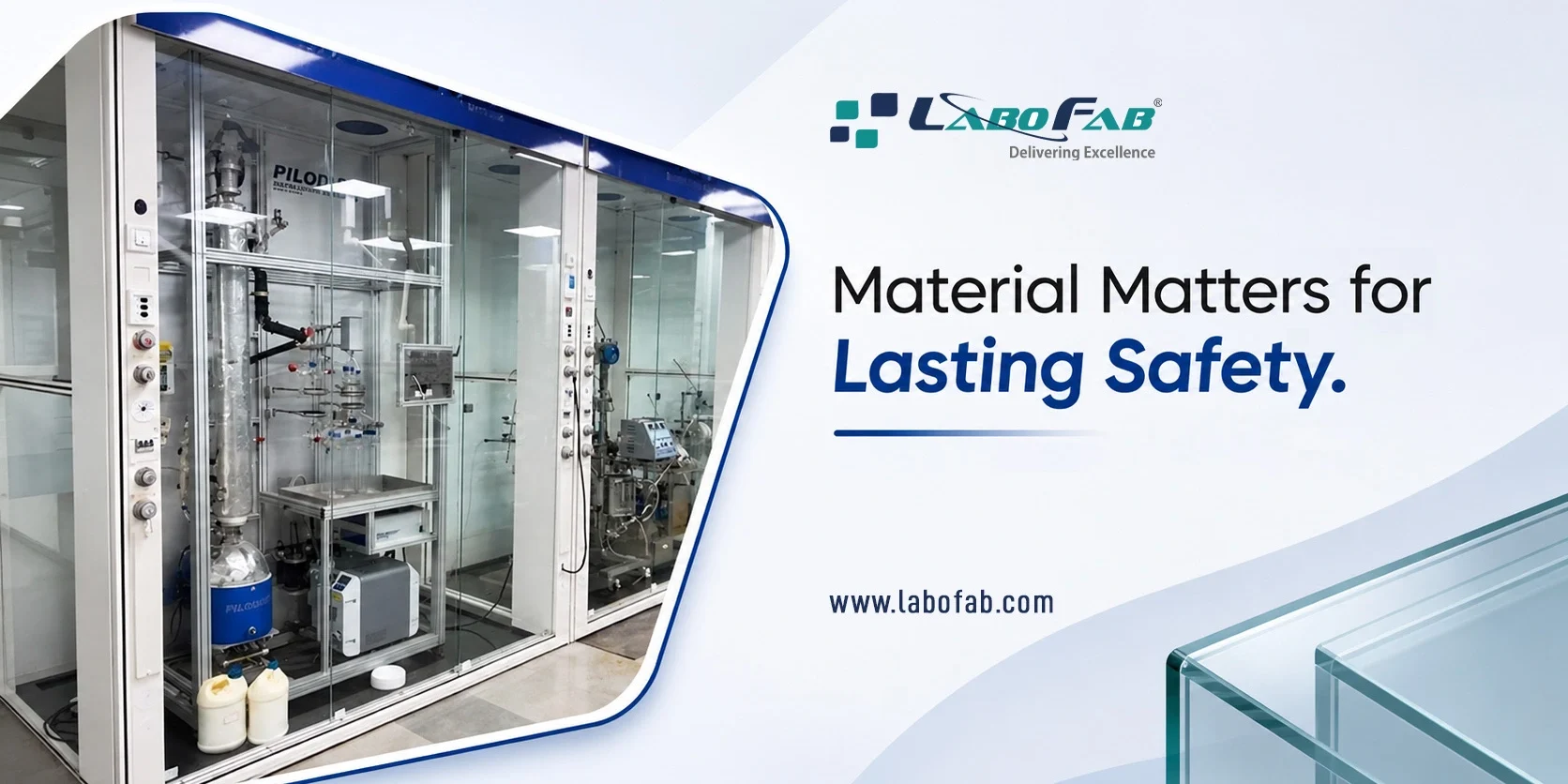
A laboratory fume hood operates in an environment where construction materials are regularly exposed to chemical vapours, moisture, heat and demanding working conditions. While airflow and exhaust arrangements receive considerable attention during equipment selection, the materials used in its construction are equally important.
Different materials respond differently to chemical exposure. Some withstand repeated contact with specific substances, while others may deteriorate under incompatible conditions. These differences can influence surface durability, maintenance requirements and the overall suitability of the equipment.
Selecting the right laboratory fume hood therefore requires evaluating its framework, internal lining, work surface and protective finish according to the intended application.
Chemical Exposure Changes Everything
Chemical compatibility is one of the primary considerations when selecting a fume hood. Acids, alkalis, organic solvents and other chemical agents can interact differently with metals, coatings, laminates and polymer-based surfaces.
Commonly used materials include stainless steel, epoxy resin, phenolic resin and polypropylene. Each offers distinct properties depending on its composition and application. For instance, polypropylene is often considered for applications involving certain corrosive chemicals, while epoxy resin work surfaces offer resistance to various chemicals and mechanical demands.
However, no material is universally compatible with every laboratory substance. Its performance depends on factors such as chemical concentration, temperature, exposure duration and cleaning practices.
This becomes particularly important in pharmaceutical, chemical testing and research facilities, where different procedures can involve substantially different exposure conditions. Material selection should therefore begin with an understanding of the chemicals being handled.
Material Choices Need Context
A fume hood consists of several components, each with specific material requirements. The external framework provides structural support, while the internal lining and work surface experience closer contact with the working environment.
Metal-based construction can provide structural strength, but its suitability also depends on surface finishes and protective treatments. Similarly, worktop materials should be evaluated for chemical resistance, temperature tolerance, cleaning requirements and mechanical strength.
The internal lining deserves particular attention because it forms part of the working chamber where chemical handling takes place. Its composition should suit the substances and procedures expected during normal operation.
A chemically resistant worktop alone does not guarantee that the complete equipment is suitable for a particular application. The framework, joints, internal surfaces and other exposed components must also meet the requirements of the laboratory environment.
Construction Goes Beyond Appearance
The finish of a fume hood influences more than its visual appearance. Surface treatment, fabrication quality and component assembly can affect maintenance requirements and the equipment’s long-term condition.
Joints, edges and connections deserve particular attention because poorly finished areas can become difficult to clean and maintain. Exposed metal surfaces may also require appropriate protective finishes depending on their operating environment.
Labofab incorporates high-quality furniture-grade GPSP with an ‘O’ spangle finish in its construction. The iron used conforms to applicable industry standards. These specifications are important when evaluating the structural framework of laboratory furniture and equipment.
The same considerations apply when selecting a bench top fume hood or tabletop fume extraction system. Compact dimensions do not eliminate the need for appropriate construction materials. Internal surfaces and exposed components must still suit the chemicals and procedures involved.
Ultimately, fabrication quality and material specifications should be evaluated together rather than treated as separate purchasing factors.
Selection Starts with Application
Before choosing a fume hood, laboratories should identify the processes it will support. A pharmaceutical research facility may have different material requirements from a chemical testing laboratory, biotechnology facility or educational institution.
Consider these essential factors before finalising the equipment specification:
- Chemical Compatibility: Identify the chemicals, their concentrations and expected exposure conditions.
- Temperature Conditions: Evaluate whether laboratory procedures generate heat that could affect internal surfaces or worktops.
- Cleaning Requirements: Ensure selected materials can withstand the cleaning agents used during routine maintenance.
- Structural Requirements: Assess framework strength, fabrication quality and component suitability.
- Maintenance Considerations: Examine surface accessibility, joint finishing and long-term maintenance requirements.
A reliable laboratory fume hood manufacturer should be able to explain material specifications; component finishes and their suitability for the intended application. This is particularly important when laboratories require customised configurations or specialised working arrangements.
The right selection involves choosing compatible materials for individual components and ensuring that the complete equipment configuration supports the laboratory’s operational requirements.
Choose Materials with Purpose
Long-term laboratory performance depends on more than airflow capacity and equipment dimensions. Construction materials also influence how effectively a fume hood supports its intended application.
At Labofab, we focus on laboratory furniture and fume hood solutions developed around practical laboratory requirements. Explore our range of laboratory fume hoods and consult our team to identify material specifications suited to your laboratory’s chemical handling requirements.
Frequently Asked Questions
- Why is material selection important in a laboratory fume hood?
It influences chemical resistance, structural durability, maintenance and long-term suitability.
- Which materials are commonly used in fume hoods?
Stainless steel, epoxy resin, phenolic resin and polypropylene are used for different components, depending on application requirements.
- Do benchtop fume hoods require chemical-resistant materials?
Yes. Their internal surfaces and worktops must also suit the chemicals being handled.
- Should internal and external components use the same material?
Not necessarily. Each component has different functional and exposure requirements.